
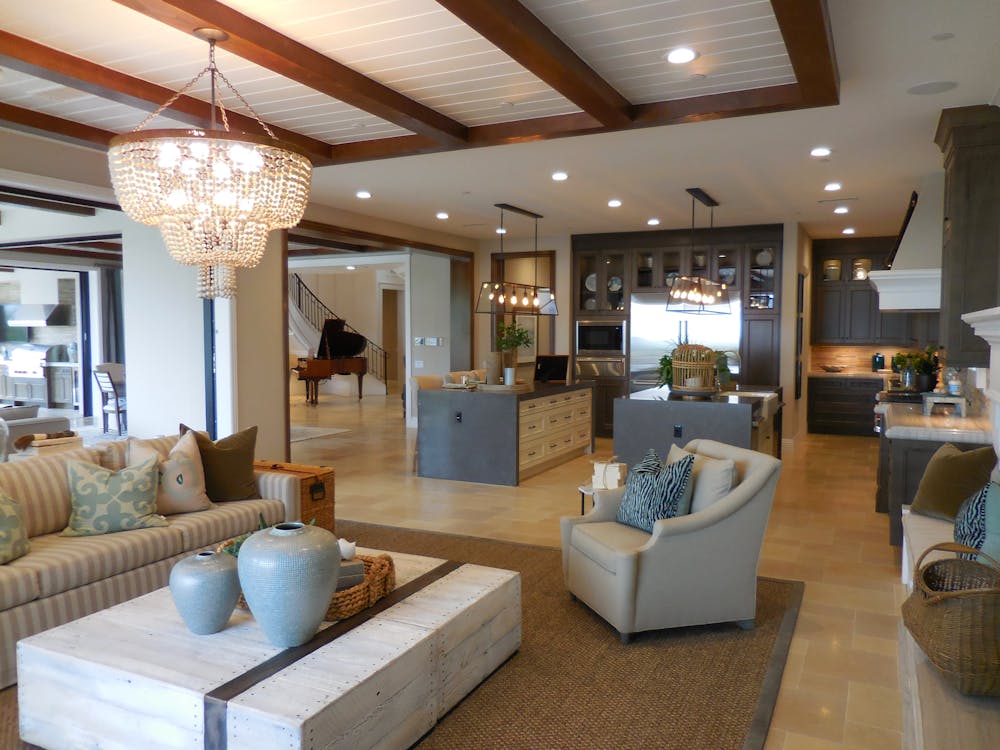
Large homes are unforgiving. In a smaller house, you can get away with a few average decisions. In a grand residence, every choice is amplified. A modest light fixture looks timid. A standard sofa seems adrift. Even silence feels louder in a room that stretches twenty feet upward.
That is the real challenge. Scale changes perception. It affects comfort, movement, sound, light, and even how materials age over time. If you are shaping interiors for a large property, you are not styling rooms. You are managing volume. You are deciding how architecture and daily life meet each other without friction. That’s the key point when you are trying to sell property and make the most out of it.
1. Start With Architectural Intent, Not Decoration
Before you think about fabrics or finishes, pause. Walk through the house slowly and examine it carefully. Is the structure symmetrical and formal, or relaxed and open? Are the ceilings double height in key areas? Do hallways stretch long and wide?
The architecture already has a personality. If you push against it, the interior feels forced.
When you review mansion floor plans, you can spot hierarchy and understand how spaces connect more clearly. You see how people are meant to move around. You see which rooms anchor the home.
Your interior decisions should respect that structure. If the architecture is symmetrical and formal, overly casual furnishings may feel misplaced. If the home leans open and contemporary, heavy ornament can weigh it down. Interior elements should feel like a natural extension of the building, not an afterthought tacked on.
2. Use Strategic Zoning to Create Comfort
A vast living room can seem impressive at first glance. But true comfort comes from how spaces are organized. You need to divide the home into purposeful areas that support how you actually live.
In large properties, you often need three layers of zoning. Public zones for entertaining. Semi-private zones for family gathering. Private zones for rest. Zoning brings rhythm to a large plan. The key is using visual cues.
That might mean defining a seating area within a vast living room by anchoring it with a large rug and lower lighting. It helps the space feel grounded, even if the ceiling soars above and the floors span wide.
You are essentially designing microenvironments within a macro structure. That shift in thinking prevents spaces from feeling hollow. It’s like softening an expansive open-plan kitchen by adding a breakfast nook that feels contained and intimate. These smaller pockets change how the room feels. It’s livable. Not just large.
3. Scale Furniture and Finishes to Match the Architecture
It is tempting to respond to scale by simply enlarging everything. Larger art. Bigger chandeliers. Longer tables.
Sometimes that works. Often it does not.
Proportion is about balance, not size alone. In a room with high ceilings, vertical elements help. Taller bookcases. Substantial drapery that runs full height. Larger-scale light fixtures that help balance vertical volume.
But keep in mind, if every piece reaches for attention, the space becomes overwhelming.
Thoughtful luxury house plans often anticipate this. They provide generous wall expanses and ceiling heights that support custom millwork or substantial lighting without crowding the room. When the underlying proportions are right, your interior choices feel confident rather than oversized.
4. Think About How You Actually Move Through the House
Movement in a large home can make or break the experience. On paper, wide hallways and open rooms seem generous. In practice, poorly planned layouts can lead to long, inefficient walking paths.
As you design interiors, pay attention to how people will move around. Walk through the house as if you live there. From the garage to the kitchen. From the primary suite to the morning coffee spot. From the dining room back to the main seating area.
If you have to curve around furniture repeatedly, the layout or placement may need adjustment. In expansive rooms, floating furniture arrangements often work better than lining them on the walls. They preserve clear walkways and prevent the center of the room from feeling empty.
5. Layer Materials to Avoid Visual Emptiness
One subtle problem in large homes is flatness. Long stretches of drywall. Expansive flooring. Too much uniformity.
Depth fixes that.
Layered materials make a room feel intentional. A vast living room might benefit from paneled walls that add rhythm. A long hallway can feel more refined with carefully placed artwork and varied lighting rather than a single overhead fixture. This does not mean filling every surface. It means choosing materials with character and letting them interact.
None of this needs to feel ornate. In fact, restraint is usually more powerful. The goal is to avoid the showroom effect. You want warmth. You want thoughtful layering that creates visual interest and holds its own against architectural scale.
6. Pay Attention to Sound and Light
High ceilings and hard surfaces change acoustics. Large rooms can echo more than expected.
Soft furnishings help manage acoustics. Upholstery, drapery, rugs, and even wall treatments help absorb sound. Without them, large rooms can feel surprisingly loud and uncomfortable.
Lighting is also affected. One central chandelier rarely provides enough warmth in a large room. Layer your lighting. Ambient light for overall visibility. Floor and table lamps to bring light closer to eye level. Accent lighting to highlight architecture or art.
Natural light needs management, too. Expansive glass walls are beautiful, but glare can wash out interior finishes and strain the eyes. Thoughtful sheer treatments or adjustable shading systems let you adjust brightness without sacrificing openness.
7. Create Visual Continuity Across Expansive Layouts
In a grand residence, you often see several rooms at once. A foyer may open directly to a living area and dining space. Upper-level galleries may overlook main floors. That visibility can either create harmony or expose inconsistency.
Your design decisions should relate to one another. But cohesion does not mean repetition to the point of boredom. It means echoing certain elements across spaces. A flooring material that runs consistently through the main level. A hardware finish that appears in more than one room. A subtle color tone woven into different textiles.
These small threads tie everything together. Without them, rooms can seem like separate projects that happen to share an address.
8. Balance Statement Features
Grand homes often invite bold gestures. Sculptural staircases. Oversized artwork. Dramatic fireplaces, where even a single detail like a sunburst fire screen can define the whole room's mood. These elements add character, but too many focal points compete for attention.
Not every space needs that level of intensity.
Select your focal points carefully. Let one area command attention while others support it. Negative space can be powerful in a grand interior. It enhances impact. When statement pieces are given room to breathe, they feel deliberate and refined.
Conclusion
Designing interiors for grand homes is less about filling space and more about understanding it. When architecture and interiors align, the home feels livable. Cohesive, functional, and grounded in its scale. Not staged for effect. That is when scale becomes an asset rather than a burden. And this could be your biggest selling point while keeping all these things in mind. People do love high-end architecture but it only sells when it gives a livable vibe.
Posted by Alexander Gutierrez
Related Articles:
- Mesquite House Selling Tips
- 10 Compelling Reasons To Move To Nevada In 2024
- Relocation Cost Calculator Mesquite Nevada
- A Beginners Guide To Real Estate Investment
- How To Grow A Garden Beginners Guide
- Small Adu Design Tips 500 Square Feet
- 3 Things To Prioritize When Selling A Home In Mesquite
- Ways How Glass Railings Add Value To Your Property